

Returning to Community in an Age of Hyper-Individualism
Where differentiation is not disconnection, where we become more ourselves together.

Welcome to this edition of Walking the Liminal!
I’m glad you’re here! And if you’re a new subscriber, a special welcome!
The Exhaustion of Carrying it All Alone
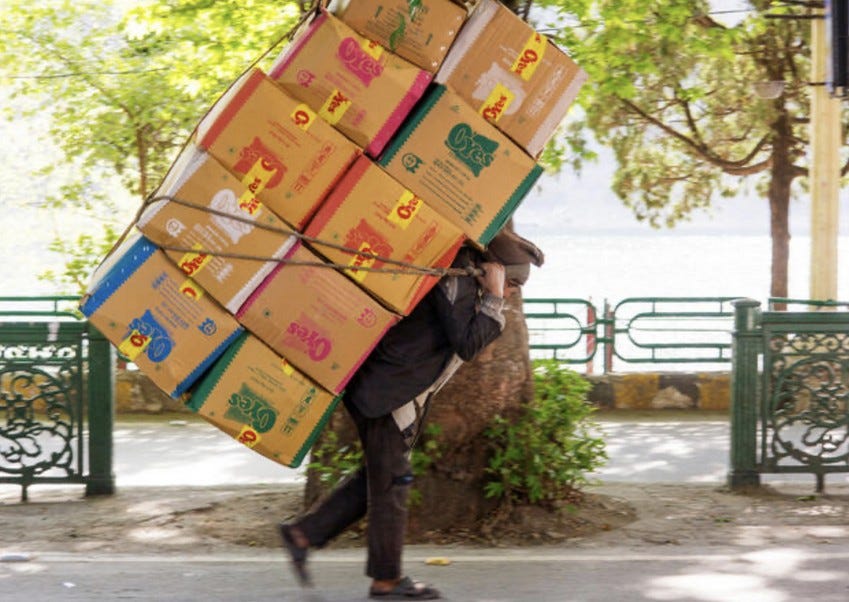
Humans were never meant to carry the world inside one nervous system.
Look around… so many of us are moving through a type of collective overwhelm. With loneliness, anxiety, and depression on the rise. I too have fallen into this, but what irks me the most, is how often this framed as personal failure rather than a reflection of the dysfunctional culture itself.
A culture that narrows in on self-containment, that masquerades it as maturity. Emphasizing…
Healing in isolation.
Hyper-independence as strength.
Self-worth through productivity and achievement.
Spiritual progress through going it alone.
The other day I wrote a note that inspired this post…
Our culture’s emphasis on Individualism is over the top.
Asking each person to bear the weight of the world inside one nervous system.
And then we wonder why so many are exhausted, anxious, and breaking.
Humans were never meant to live this way…We were meant to gather around a shared center.
A fire.
A table.
A ritual.
A song.
A meal.Because in community, burdens are distributed.
Because survival was never meant to be solitary.
Because we become more together than we could ever be alone.
Community calls us to remember something ancient and deeply human. Rekindling our innate relationality, for we’re communal, collaborative and interconnected beings.
Naming the Problem: Hyper-Individualism
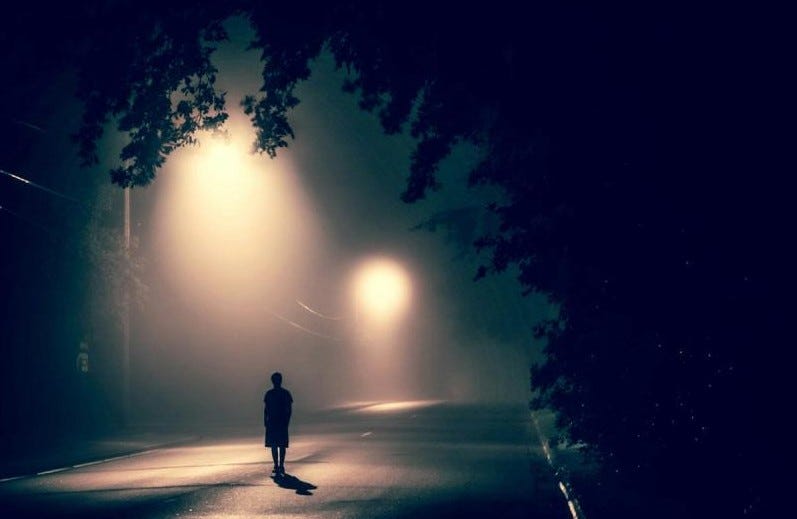
When did self-sufficiency become a moral ideal?
When did needing others become weakness?
It’s been long in the making. Suffice it to say, at some point there was a cultural shift where nature became something outside ourselves, something to control rather than what we are. The mind, logic, and written word gradually became the dominant ways of navigating life, often disconnected from the wisdom of the body, community, and the living world.
Over time, this evolved into systems that prioritized profitability, achievement, and consumption above collective well-being. Capitalism became the ruler, the organizing principle where each person becomes a worker bee to line the pockets of the very rich. This all thrives on separation. The more isolated we become, the more we consume. Separate homes, separate cars and all the accoutrements needed for daily leaving. Independence becomes the aspiration, while interdependence is quietly devalued.
And beneath it all, disconnection is normalized.
Individuality itself isn’t wrong. In its healthy expression, it’s beautiful. But within our current CHIP paradigm (Capitalistic, Hierarchical, Imperialistic Patriarchy), individuality becomes distorted into hyper-individualism: a way of living that asks each person to become entirely self-sufficient while remaining endlessly productive and consumptive.
Do you feel the weight? I know I sure do! Each of us taught to carry more and more, while the structures of community, extended family, shared labor, and collective care continue to erode. Humans were never meant to metabolize life alone.
The Distinction: Individualism ≠ Individuation
In the comment section of the original note, Oneness Awareness brought up a point that was mirroring one I was also considering. The distinction between individualism and individuation.
The more I sat with it, the more the gap grew. Hyper-individualism and true individuation are not the same thing at all. One isolates. The other differentiates without severing connection.
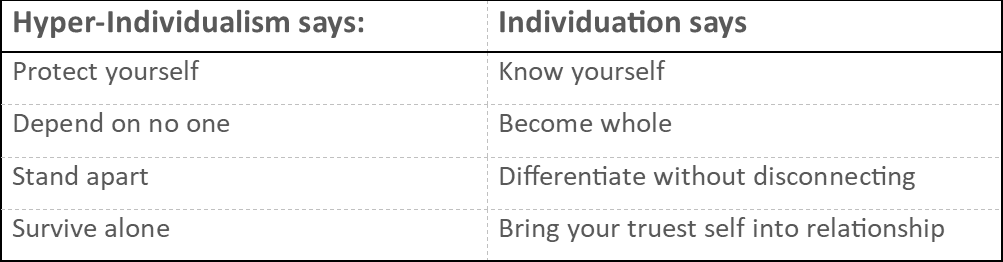
There is nothing inherently wrong with individuality or autonomy. But individualism, particularly in modern culture, has become an overemphasis on self-reliance, personal achievement, and prioritizing individual needs above collective care and communal well-being. It asks us to become self-contained, disconnected from the very relationships that help us stay human.
Individuation is something different. Associated with Jungian psychology, it’s the process of becoming more authentic through inner integration and self-awareness. Jung emphasized differentiating from family conditioning and collective norms, not isolation or radical independence.
What I’m speaking to here includes that psychological unfolding, while placing greater emphasis on relationship, embodiment, and community. Because I don’t believe becoming fully ourselves was ever meant to happen outside relationship. True individuation is not radical self-containment. It’s becoming distinct enough to enter relationship without losing ourselves inside it.
Hyper-individualism says: “Need no one.”
Individuation says: “Know who you are.”
Why Individuation Needs Community
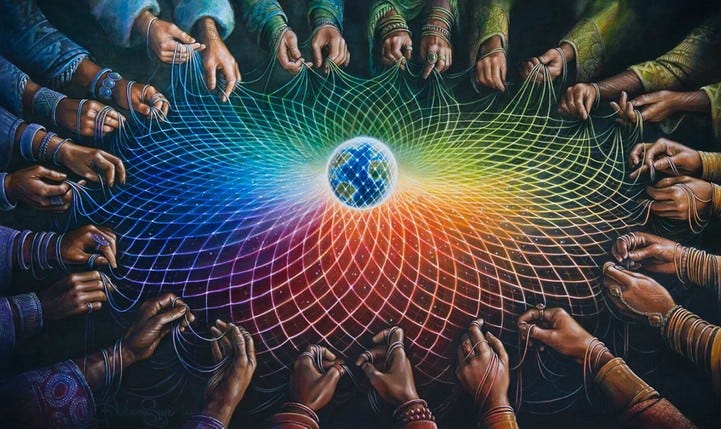
The deeper question becomes: What are we centering around? Because what we give our attention to grows.
What I keep returning to is that our natural human expression cannot emerge in isolation. We come to know ourselves through being mirrors for each other, by honestly witnessing and holding one another accountable with honesty and care. Community doesn’t prevent individuation, it reveals it.
Through connection, both our wounds and our gifts rise to the surface. We begin seeing where we hide, defend, or disconnect, while also becoming more aware of soul offerings, the talents and gifts we’re here to contribute.
This is why a shared center matters. Gathering around what nourishes life: love, meaning, care, ritual, honesty, and genuine connection.
Healthy community becomes more than the sum of the parts, reminding us we were never meant to carry everything alone. It distributes care, meaning, labor, joy, grief, hardship and responsibility. Historically, humans survived because life was shared.
In true belonging, we don’t have to abandon ourselves to be accepted. And perhaps that is where authenticity deepens most, where our gifts finally have somewhere alive to land.
Community is Also Messy
And being in intentional community doesn’t make things ideal or easy! Community is messy. We’re needing to relearn what true collaboration, interdependence, and relational responsibility mean after generations of hyper-individualism and disconnection.
Over these past few months, I’ve been co-creating a community called The Weaving, rooted in many of the values expressed here. And what I’ve experienced is how anything unresolved, personally or collectively, eventually makes its way to the surface. Differences emerge. Disagreements happen. Conflict arises. It’s not a matter of if, but when. And this is part of the necessary work.
What I’m personally learning is how to accommodate different ways of working, thinking, and relating. How to navigate different rhythms, needs, and even time zones where I’m often the last one awake and feeling pressure to catch up. I’ve noticed where I compromise my morning practices that normally ground me. So, part of this process is not only learning how to collaborate but also learning how to honor my own needs while remaining in relationship.
Healthy community is not the absence of tension. It’s the willingness to remain in relationship with honesty, accountability, repair, and deeper understanding. Individuation within community asks us not to disappear into the group, nor abandon connection at the first sign of discomfort, but to learn how to stay present without losing ourselves.
That is vulnerable work. Sacred work. Human work.
Returning to Our Shared Center
Is your center rooted in devotion, meaning, and the nurturing of your gifts? Or in extraction, productivity, and consumption? Most of us are likely moving somewhere between the two. These are threshold times, inviting us to return to ourselves and one another with greater compassion and care.
Beneath all the exhaustion, anxiety, and isolation is a remembering that we were never meant to carry the full weight of life alone.
We were meant to gather around a shared center.
A fire.
A table.
A ritual.
A song.
A meal.
Becoming more fully ourselves while remaining deeply interconnected. Distinct, yet woven into something larger. Whole enough to enter relationship honestly without losing ourselves inside it.
A healthy community does not erase individuality. It provides the ground where our gifts can take root, be nurtured and bloom.
Perhaps what we need now, more than ever, are more spaces where we can become fully human together.

If this resonates and speaks to something within you, you’re welcome to explore our community, The Weaving.
Offerings:
I offer tarot readings and one-on-one sessions, a held space of reflection designed to accompany your inner explorations, integrations and alignment with the rhythms of life. If this resonates, feel free to send me a message or visit my website for more information.
Thanks for reading!
I’m grateful you’re here! If this spoke to you, please click the heart, write a comment, restack or subscribe. Thank you! It helps extend the conversation beyond this space. 💜
When I moved up to the foothills of the Blue Ridge in SC almost 21 years ago, I had the dream of being in community. I was seeing concrete domes with a Central dome for group use and sustainable gardens for vegetables, etc.. I also thought I would meet a man up here but was told by a friend's husband that would probably not happen because 'everyone is married and they stay married.' Well, I found out those who were available were not married for good reason. So none of the original dream happened for me. I live in a beautiful, quiet, safe homeowner community and I have some connection to neighbors but basically I am in the land of do it all myself (HOA gives me gardeners and we get garbage pickup). I can relate to the photo of the person carrying all the boxes on his back and to the fact that our nervous system was not meant for this.
I feel this so deeply, Julie. My wife and I have moved so frequently over the last 14 years that it’s been very difficult to feel rooted. I long for this sense of community so deeply. I’ve tried a couple of online communities, but haven’t felt a true sense of belonging (and I believe that has a lot to do with my own negative self talk/fear of being seen, judged, and found lacking). We have now remained in one spot for 2.5 year, so I’m hopeful that the tentative stepping out that I’ve started doing will lead to something lasting. Thank you for this truly insightful piece.